

The Brain Behind the Game: Why GALO Was Designed to Make Kids Think

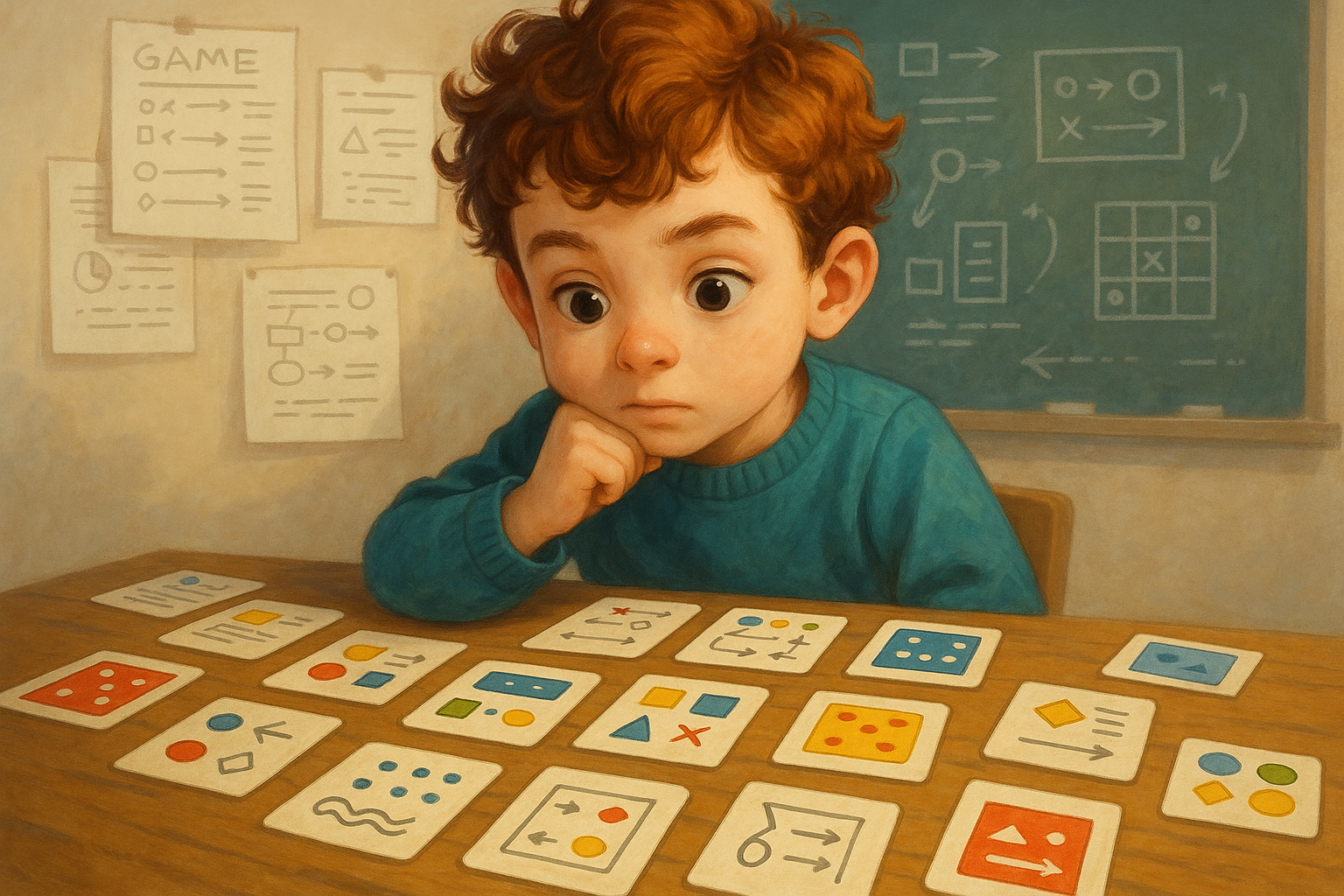
When we set out to create GALO, we weren’t just trying to make another card game. We wanted to build something that made kids want to think. A game that wasn’t about luck or chance, but about memory, logic, and sharp decision-making. A game that grows with the player, challenges their thinking, and still manages to make them laugh. In short, we wanted to create the kind of game we wished existed when we were kids.
The Problem with Most Kids’ Games
So many games on the market today are either overly simplistic or heavily luck-based. Spin the wheel, pick a card, roll the dice — and hope for the best. While these games can be fun in the short term, they rarely hold a child’s attention over time. More importantly, they don’t engage the cognitive muscles that really matter: memory, reasoning, attention, and strategy.
GALO was designed to break that mold.
Strategy Over Chance
At the core of GALO is the idea that strategy should be the winning factor. Players need to assess their position, plan their moves, and adapt to what’s happening on the table. It’s not enough to have good cards; you need to use them smartly.
We intentionally built layers of depth into the game. New players can enjoy it right away with simple rules. But as you play more, patterns emerge, strategies evolve, and players begin to anticipate others’ moves. That’s when the real magic happens.
The Role of Memory and Observation
Unlike many fast-paced or flashy games, GALO rewards players who pay attention. If you remember which cards have been played, you gain an advantage. If you notice an opponent’s pattern, you can disrupt their flow. It’s a memory challenge that feels natural, not forced.
This kind of gameplay strengthens working memory, a key part of cognitive development in children. And since it happens through fun, engaging play, kids don’t even realize they’re building a powerful mental skill set.
Chaos Meets Control
One of our favorite aspects of GALO is the way it balances structure and surprise. The base game follows clear rules, but the inclusion of Chaos Cards keeps players on their toes. These cards can flip the outcome of a round or disrupt a winning streak — making the game unpredictable, without being unfair.
This tension between planning and unpredictability mirrors real life. It teaches kids that even the best strategy might need a quick pivot. It also adds excitement without taking away the importance of thinking ahead.
Designed to Grow With the Player
We knew from the beginning that GALO needed to scale with age and ability. That’s why the core game is simple to learn, but the Power Cards and advanced modes can be added over time.
Younger kids can start with basic gameplay and still feel competitive. As they grow and become more comfortable, you can introduce advanced cards that change the dynamics, introduce more strategy, and even more memory components.
This progressive structure means the game stays fresh. It evolves alongside your child’s thinking, making it a long-term companion instead of a short-lived toy.
More Than a Game: A Learning Tool in Disguise
What excites us most is hearing from parents and teachers who tell us how GALO is helping their kids think differently. It’s not a workbook. It’s not an app. It’s not a lecture. It’s a game — but one that nurtures patience, analysis, and mental flexibility.
Children learn:
- To think ahead and plan
- To observe and adapt
- To lose gracefully and learn from mistakes
- To reflect on their moves and outcomes
These are life skills. And we believe they should start developing early — joyfully, not forcefully.
The Takeaway
GALO isn’t just fun. It’s intentional. Every card, every rule, and every surprise is designed to make kids smarter, sharper, and more engaged.
At Inspiration Box, we’re proud to say GALO is more than a game. It’s an experience built on the idea that kids are capable of incredible things when we give them the right tools.
So open the box. Let the thinking begin.